


How the Nepal Red Cross Society and Communities in Nepalgunj Are Getting Ahead of Extreme Heat
It’s May, and in Nepal temperatures are about to reach dangerous levels of heat. In the city of Nepalgunj, this triggers authorities and local partners to take action before the worst impacts of the heat are felt.
Nepalgunj has taken several steps which enable the mobilization of city-wide network of institutions, volunteers, health workers, utilities, media outlets and communities to tackle the impact of extreme heat. First, a long-term Heat Action Plan was developed and implemented by the Nepalgunj Sub-metropolitan, with support from the Nepal Red Cross Society and Red Cross Red Crescent IFRC network partners including Finnish Red Cross, American Red Cross and Red Crescent Climate Center, and with financial support from the Ministry for Foreign Affairs of Finland and the Rockefeller Foundation. Secondly, simplified Early Action Protocols were developed to take timely actions to minimize the impacts of a heatwave in urban hotspots, where readiness and early actions are financed by IFRC’s Disaster Response Emergency Fund. And the goal is simple: to protect people before extreme heat becomes synonymous with disaster. During the heat season, heatwave forecasts can trigger a coordinated response that disseminates public warnings, activates cooling centres, increases access to safe drinking water, and reaches those most exposed to extreme heat.
Day 1: The forecast arrives
Meteorologists at the Department of Hydrology and Meteorology (DHM) have been monitoring temperatures closely, and their Special Bulletin on heatwave forecast indicates that an ‘extreme heatwave’ is likely to affect Nepalgunj city in the coming days. The Early Action Protocol is activated, and the alert is passed to the city authorities, the Nepal Red Cross Society (NRCS), health officials and disaster management actors. What follows is less dramatic than a siren, but potentially far more effective: news in social media circulates, WhatsApp and messenger groups light up, information is shared over local radio and television channels, and emergency meetings are quickly organized between the municipality, disaster management authorities, the NRCS and other frontline service providers. Coordination is easier because roles and responsibilities were agreed upon before the heat season began.
Day 2: The warning reaches people
The heatwave has not yet arrived, but citizens of Nepalgunj are beginning to take some actions. Immediately after the special bulletin is issued, local radio stations and television channels start broadcasting heat safety messages, SMS alerts begin appearing on mobile phones, and social media channels carry simple but actionable advice: drink water frequently, avoid strenuous activity during peak heat, seek shades and check on vulnerable neighbours. This way, information about cooling centres and water distribution points is shared widely. Similarly, at busy city road intersections and public places, electronic displays show current temperatures and heat-risk awareness messages, and posters that had been prepared before the season are placed outside hospitals, schools, markets, municipal offices and main squares around the city and distributed to share the information.
Day 1-3: Volunteers step into action
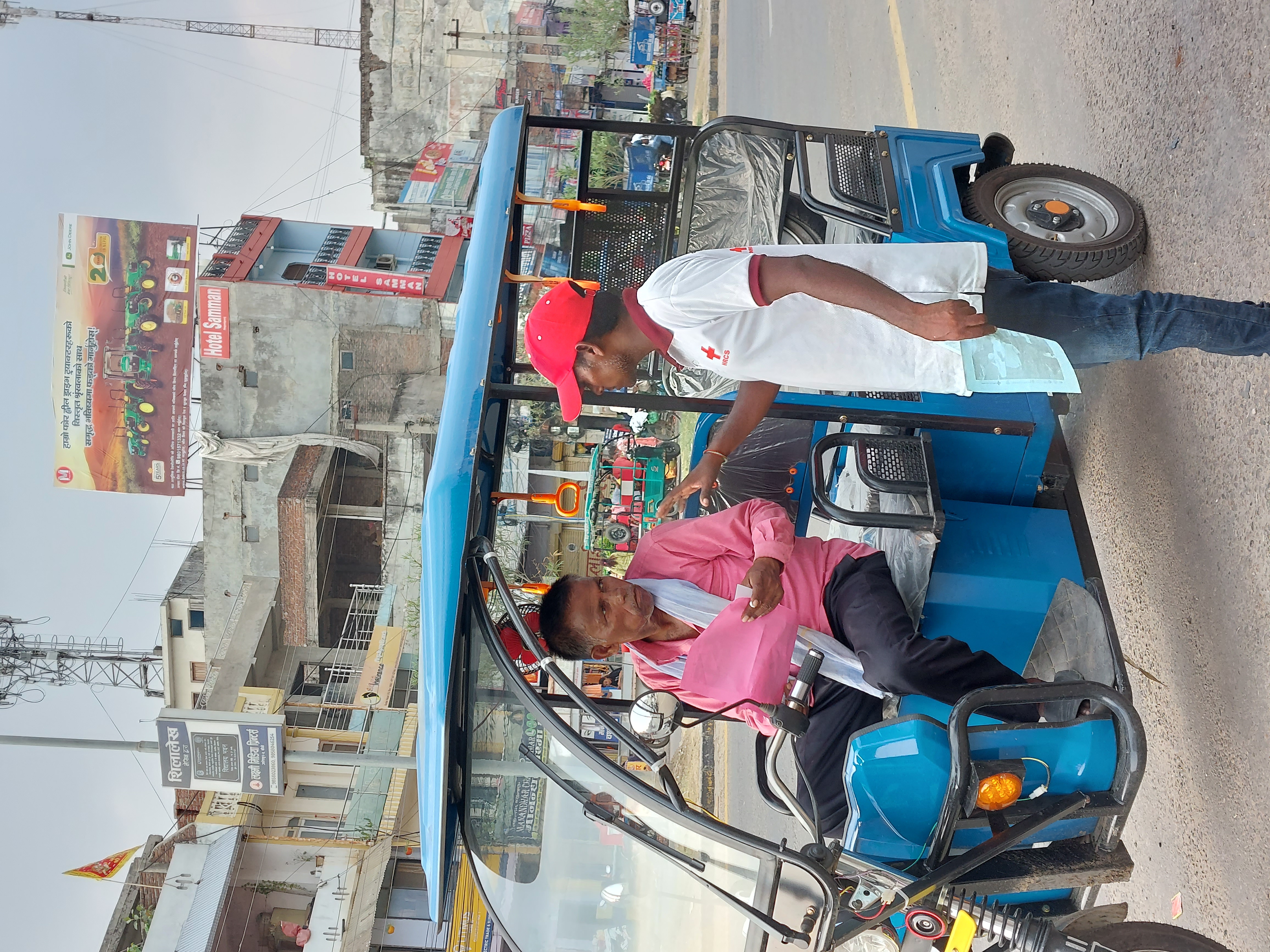
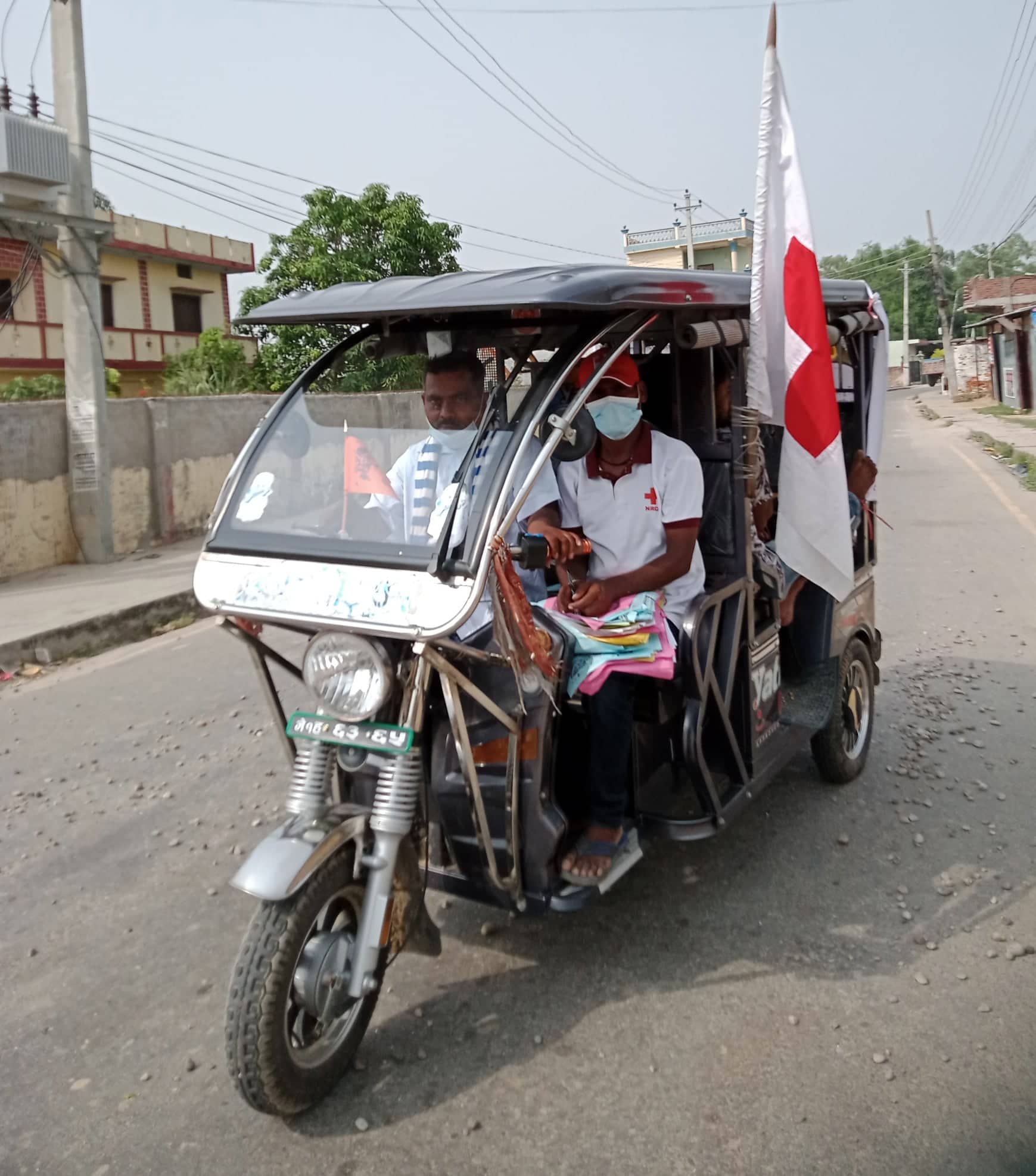
NRCS’s network of volunteers is widely mobilized in Nepalgunj to disseminate warning messages to the people at risk who have less access to the information. Even the mobile vehicle with loudspeakers disseminates the messages to the wider group of communities.
Volunteers and other frontline workers take to the streets and alleys of local communities. In one neighbourhood, volunteers gather groups of women for brief awareness sessions on staying safe during extreme heat. In another, volunteers visit markets where street vendors and rickshaw drivers work long hours under the sun. Some volunteers focus on door-to-door outreach, checking on elderly residents, people with disabilities, people with chronic illnesses and households previously identified as particularly exposed to heat risks.
A volunteer knocks on the door of an elderly woman living alone.
"Are you doing well?"
"Have you been drinking enough water?"
"Do you know where the nearest cooling centre is?"
"Do you have someone who can check on you tomorrow?"
These conversations may seem small and simple, but they are exactly what anticipatory action is designed to achieve: turning a forecast into practical protection before lives are put at risk. The Early Action Protocol highlights targeted communication and outreach to groups disproportionately affected by extreme heat as a core component of the anticipatory intervention.
Day 4: Public services adapt
As temperatures continue to rise, the Nepalgunj city system responds to the situation. Cooling centres, located in areas with high numbers of outdoor workers, street dwellers and populations experiencing heightened vulnerabilities, open their doors. They offer shade, water, fans and a safe place to rest during the hottest hours of the day. The Nepalgunj Municipality with support from NRCS, disaster management authorities, and private sector partners - engaged through pre-established agreements with NRCS for ready-to-install shading spaces - work together to keep them operational. Local businesses and community members help to support and maintain these essential services.
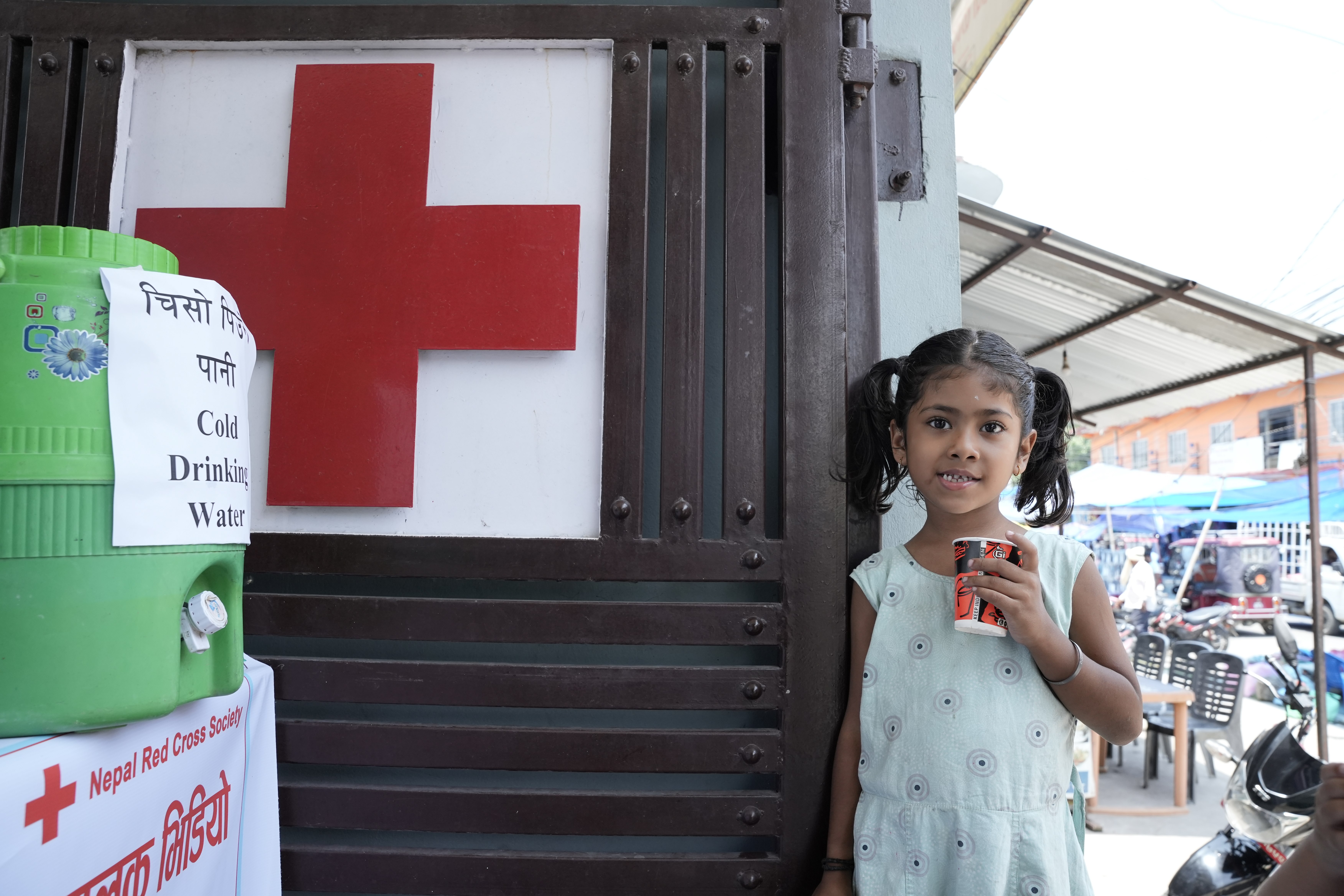
At the same time, water becomes a priority. Water tankers are dispatched to water-stressed neighbourhoods, busy transport hubs, country border areas, and hotspot areas where residents most exposed to the impacts of extreme heat are concentrated. Additional drinking water points become operational, ensuring that people can access safe water without travelling long distances in dangerous heat.
These measures directly impact the community, and for the better: for a construction worker spending the day outdoors, that extra water point may prevent dehydration, while for an elderly resident a nearby cooling centre may prevent a hospital visit.
Day 5: Health services prepare
Inside Bheri Hospital and other health facilities, preparations are underway to respond to the health risks posed by extreme heat. NRCS works closely with the municipal health unit to support primary healthcare services and ensure preventive measures, including awareness message dissemination, are in place during heatwaves. Ambulances remain on standby, while Female Community Health Volunteers, Rapid Response Teams, and NRCS volunteers stay alert to identify heat-related illnesses, provide first aid, and support those most at risk.
Furthermore, what is striking about NRCS’s Early Action Protocols in Nepalgunj is that no single organisation acts alone. Meteorologists provide the forecast; municipal authorities activate the early actions and needful response; the District Disaster Management Committee coordinates; media outlets spread warnings. NRCS and other frontline organisations mobilise volunteers; water suppliers improve access to drinking water; electricity providers help ensure cooling centres remain operational; health services prepare for increased demand. NRCS collaborates closely with local authorities to provide essential resources, accelerate service delivery and offer technical expertise that enhances the effectiveness of interventions.. Each actor contributes a small but essential part of a much larger system. This is what anticipatory action looks like in practice.
Why this matters beyond Nepalgunj
For policymakers in Brussels, Nepalgunj offers an important lesson. In the EU, climate adaptation is often discussed in terms of data management, infrastructure, policies and investment frameworks. These are all essential. But when an extreme event is only days away, resilience ultimately depends on something more immediate: whether people receive the information, understand the message, trust the messenger, know what to do with it and have the agency to act upon it, whether institutions know their roles and have the capacity to protect those most exposed, and whether life-saving action can happen before the shock hits and is quickly enough.
NRCS’s Early Action Protocols covering Nepalgunj teach us that the most effective disaster response starts before the disaster begins.
Why this matters beyond Nepalgunj
For policymakers in Brussels, Nepalgunj offers an important lesson.
In the EU, climate adaptation is often discussed in terms of data management, infrastructure, policies and investment frameworks. These are all essential. But when an extreme event is only days away, resilience ultimately depends on something more immediate: whether people receive the information, understand the message, trust the messenger, know what to do with it and have the agency to act upon it, whether institutions know their roles and have the capacity to protect those most exposed, and whether life-saving action can happen before the shock hits and is quickly enough.
A forecast, by itself, does not save lives. What saves lives is what happens next.
Cover photo credits: American Red Cross
