


Second hand, first choice: How Red Cross shops build communities and cut waste
Second-hand clothes are exploding in popularity, driven by sustainability concerns, hunting for unique finds, and economic factors like inflation. “Second-hand shops used to be a place where socially vulnerable people could get things at a low price. That’s still the case—but the climate discussion has raised second-hand shopping to a new level. Today, people post their great second-hand finds on Instagram or TikTok,” explains Tina Donnerborg, Head of Recycling of the Danish Red Cross.
For the Red Cross, thrifting is not new. The Danish Red Cross opened its first charity shop in 1975. Today, it runs 260 shops across Denmark, powered by 10,000 volunteers, with profits funding local social programmes and emergency aid worldwide.
New challenges
Reusing clothes is a form of climate action, as it contributes to reducing textile waste. In 2023, the EU generated 12.6 million tonnes of textile waste, or 12 kg per person. To address this, the EU revised the Waste Framework Directive, requiring separate textile collection from January 2025. While this is a step toward building a more circular economy, it brings new challenges for community-driven initiatives.
Red Cross textile reuse programmes are under pressure from two opposing trends. On one hand, we see surging donations of low-quality textiles, which drive up sorting costs and threaten sustainability. In Poland, this led to a system collapse after a 60% increase in unusable textiles, with similar issues experienced in Sweden and Belgium. On the other hand, since January 2025, declining donations, as government-run schemes and commercial operators expand, are reducing vital funding sources for humanitarian work and compromising support for communities experiencing vulnerability.
Red Cross: Impact beyond clothes
Across Europe, Red Cross National Societies are building strong reuse and textile collection systems that support both people and the planet.
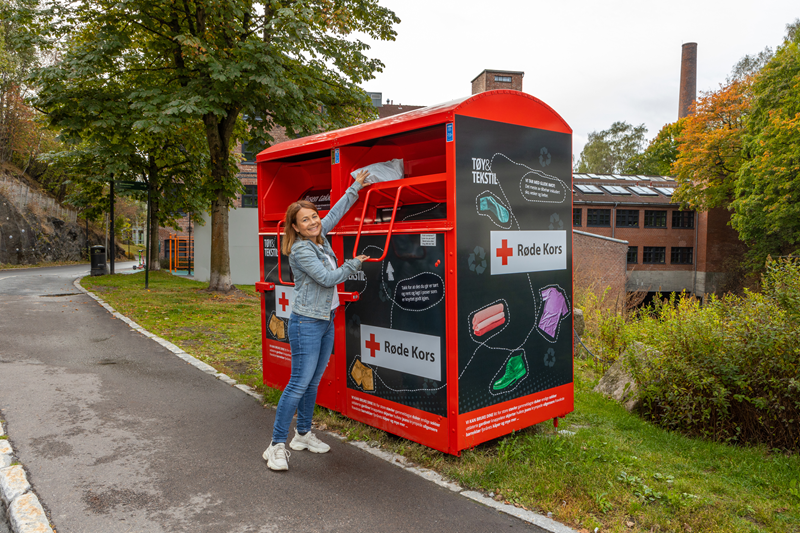
In Finland, this includes the Kontti online store, 12 large secondhand shops, and a network of smaller local outlets that double up as social meeting points. Norwegian Red Cross keeps donations flowing through around 620 textile banks in Oslo and home pickups, while also piloting online sales of children’s clothes to reach more families.
The Swedish Red Cross has developed one of the largest networks, with 260 shops powered by 6,700 volunteers who even sort damaged items for recycling. “When we get stuff that is too damaged to be reused or sold, we actually sort it out by what it’s made of and go to a recycling centre,” explains a volunteer. The proceeds fund extensive social support: in 2024 alone, nearly 42,000 people received food bags, gift cards, or hot meals; more than 14,000 received clothing; 3,000 people found warmth and rest; and over 50,000 accessed a safe and welcoming space through Red Cross services.
The Polish Red Cross' has also taken a major step forward. In 2024, it opened its first charity shop, DOBROsklep PCK, collecting more than 15 tonnes of textiles, providing essentials to 1,000 people, and hosting 28 free workshops on ecology, upcycling, and crafts. This builds on over a decade of managing 30,000 collection containers nationwide, which together have gathered an extraordinary 600,000 tonnes of reusable textiles. In Belgium, the Red Cross runs 90 secondhand shops, collecting 761 tonnes of textiles in 2024, with 349 tonnes sold and 313 tonnes processed by partners.
These initiatives all reinforce circular models that keep materials in use, while also supporting social programmes and international humanitarian assistance.
/BE%20RC.png)
Looking Ahead
The future of textile reuse depends on fair implementation of Extended Producer Responsibility (EPR) schemes under the Waste Framework Directive under which many National Societies will have new responsibilities as waste managers. National Red Cross Societies, powered by volunteers and committed to climate action, create immense social value: reducing waste, fostering inclusion, and reinvesting every euro into helping communities experiencing vulnerabilities. Policies must protect these lifelines and ensure that reuse initiatives put people—not profit—at the heart of the circular economy.
