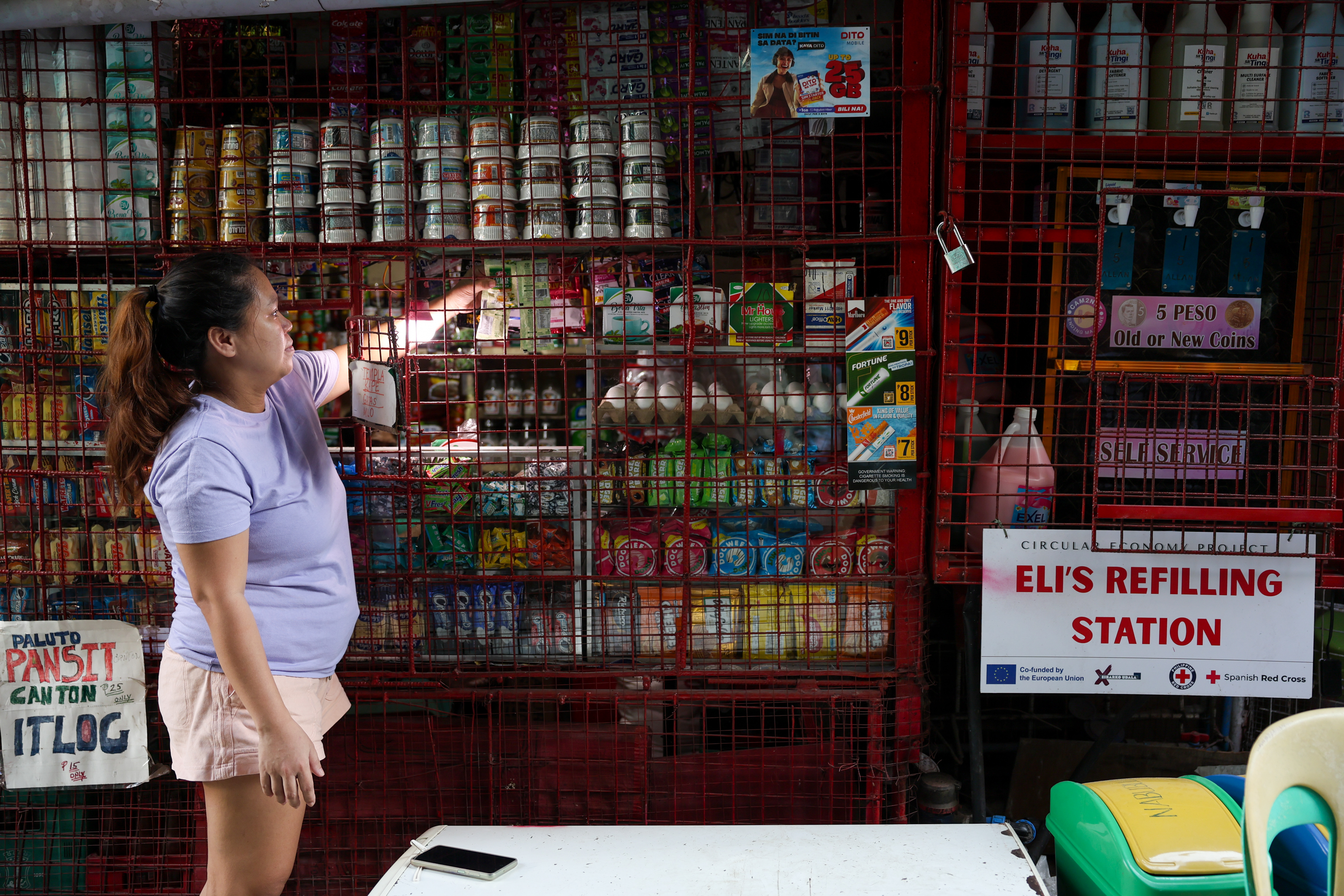


Turning Waste Into Livelihoods: How Communities in the Philippines Are Building a Circular Economy
In Baseco, a densely packed coastal district of Manila, Emilie Vasquez sorts through sacks of plastic between the narrow lanes of homes, separating bottles from wrappers, cleaning what can be reused, setting aside what cannot. Just a few years ago, this same waste sat uncollected in the streets. Today, it helps put food on her family’s table.
"Before the Philippine Red Cross came, I earned money by peeling garlic to help support my child, since my husband can no longer support us due to his age," she says.
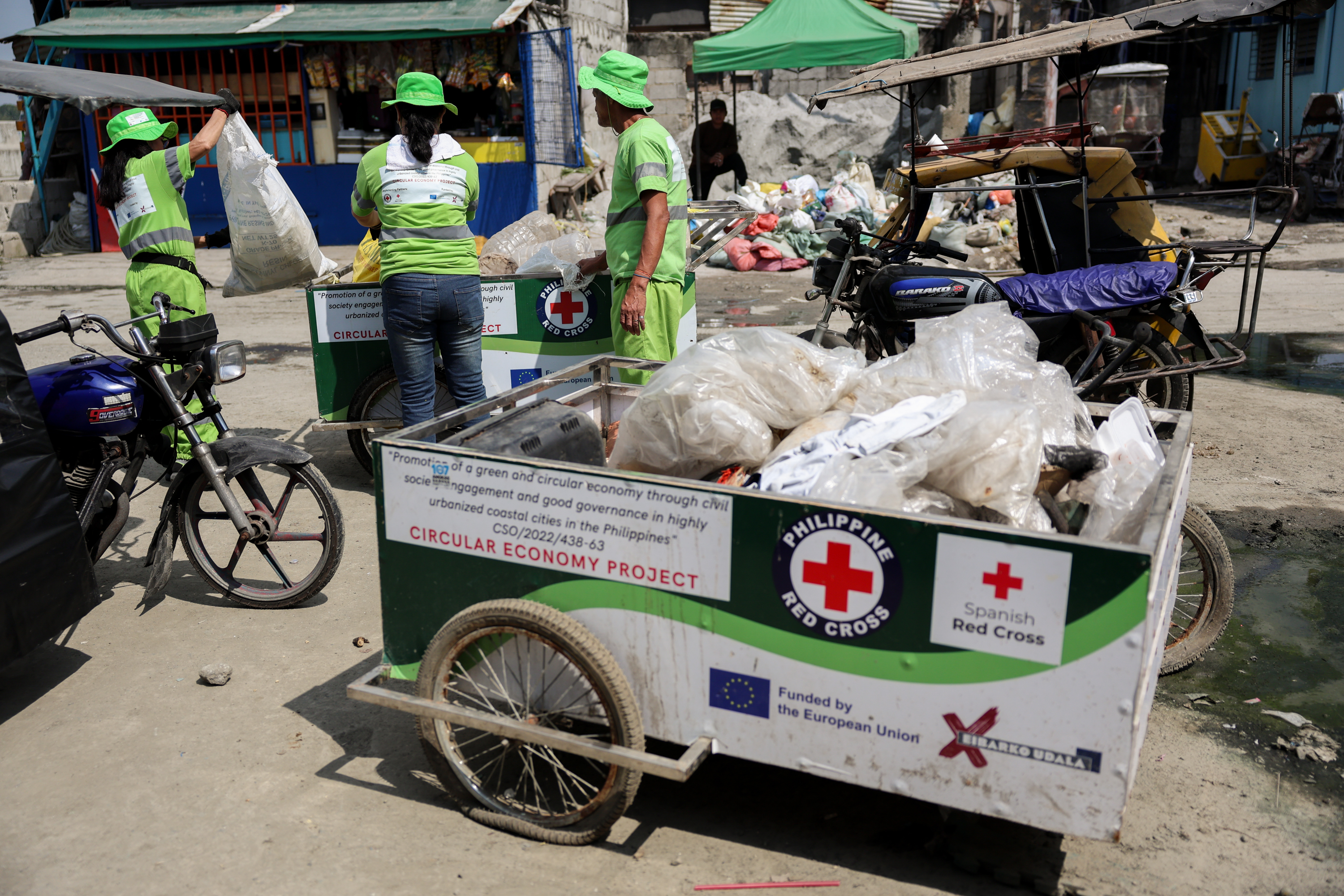
Emilie is one of many community members who have turned waste into opportunity across three highly urbanised coastal cities in the Philippines: Manila, Navotas and Zamboanga. Financed by the European Union and the Municipality of Eibar, and implemented by the Philippine Red Cross, the Spanish Red Cross, and university partners, the project has helped informal waste workers build livelihoods while reducing plastic pollution in their communities.
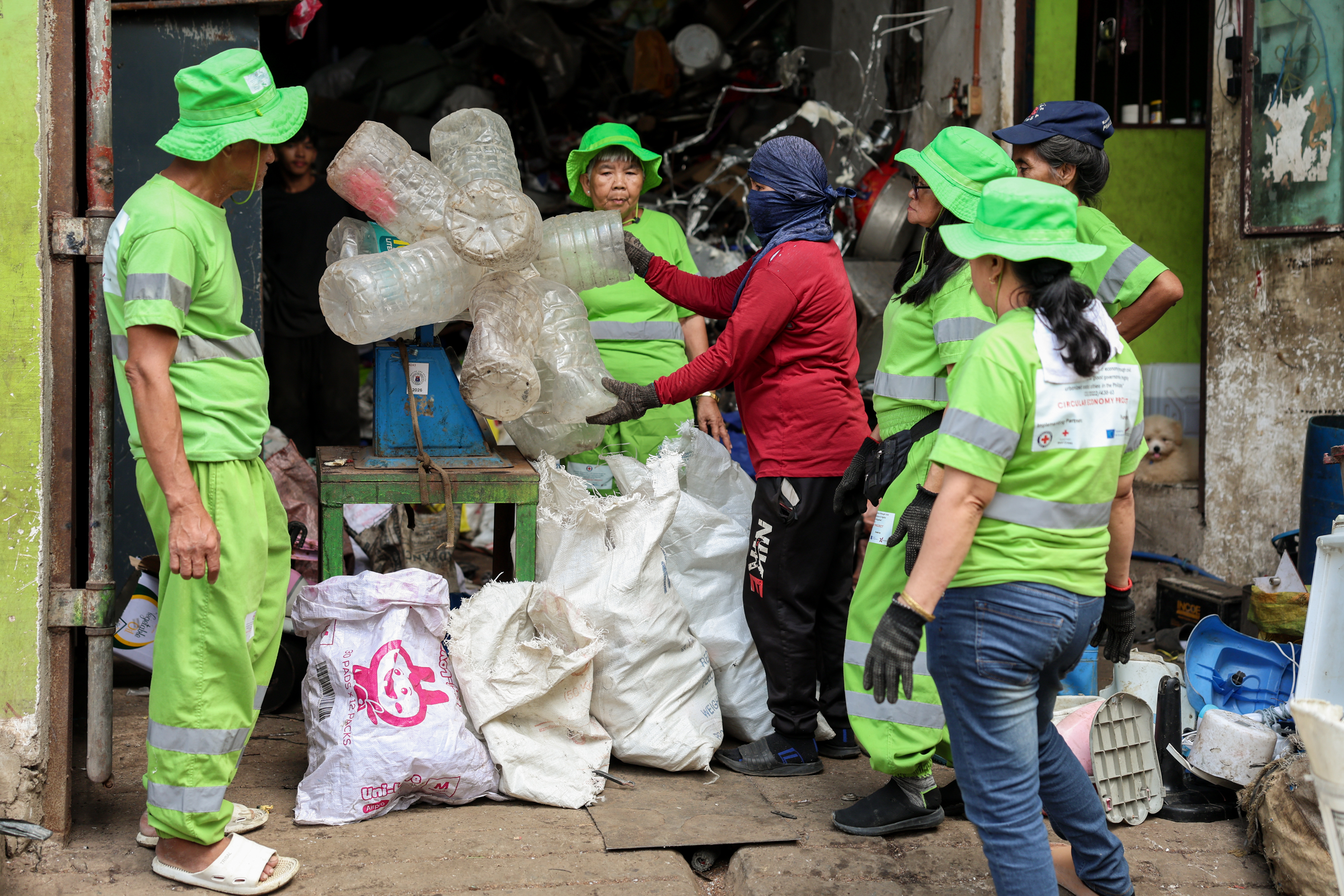
From Peeling Garlic to Running a Business
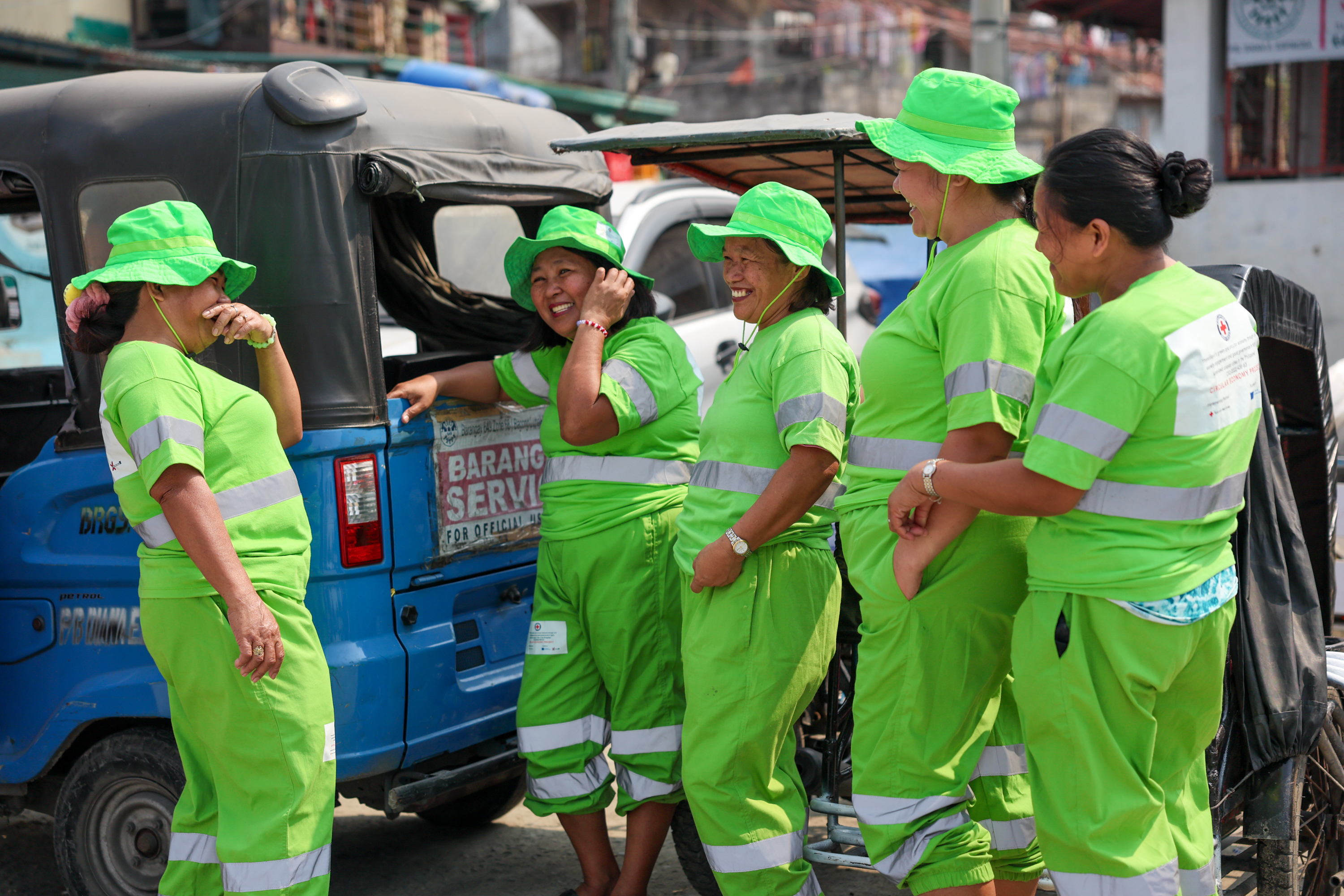
For many residents, waste collection began as a way to earn an income but soon grew into something more. "We decided to form a group of 21 people. That was how our association started," recalls Cherel Dungon of the Bayanihan Association in Baseco. "People noticed that our block became cleaner. Before, they laughed at what we were doing. Now, they voluntarily give their plastic waste to us. Collecting and cleaning waste has become our bonding. Through this, we gained a livelihood and learned how to run a business."
That experience echoes across other groups in Baseco. "What we have is our togetherness. Despite the hardships and the heat, we have overcome many challenges. There are also people who ask why we're doing this kind of work. We don't pay attention to them," says Myrna Ajero of the Block 9 Ladies Association.
As the associations grew, so did members' ambitions to build greater financial security for themselves and their families.
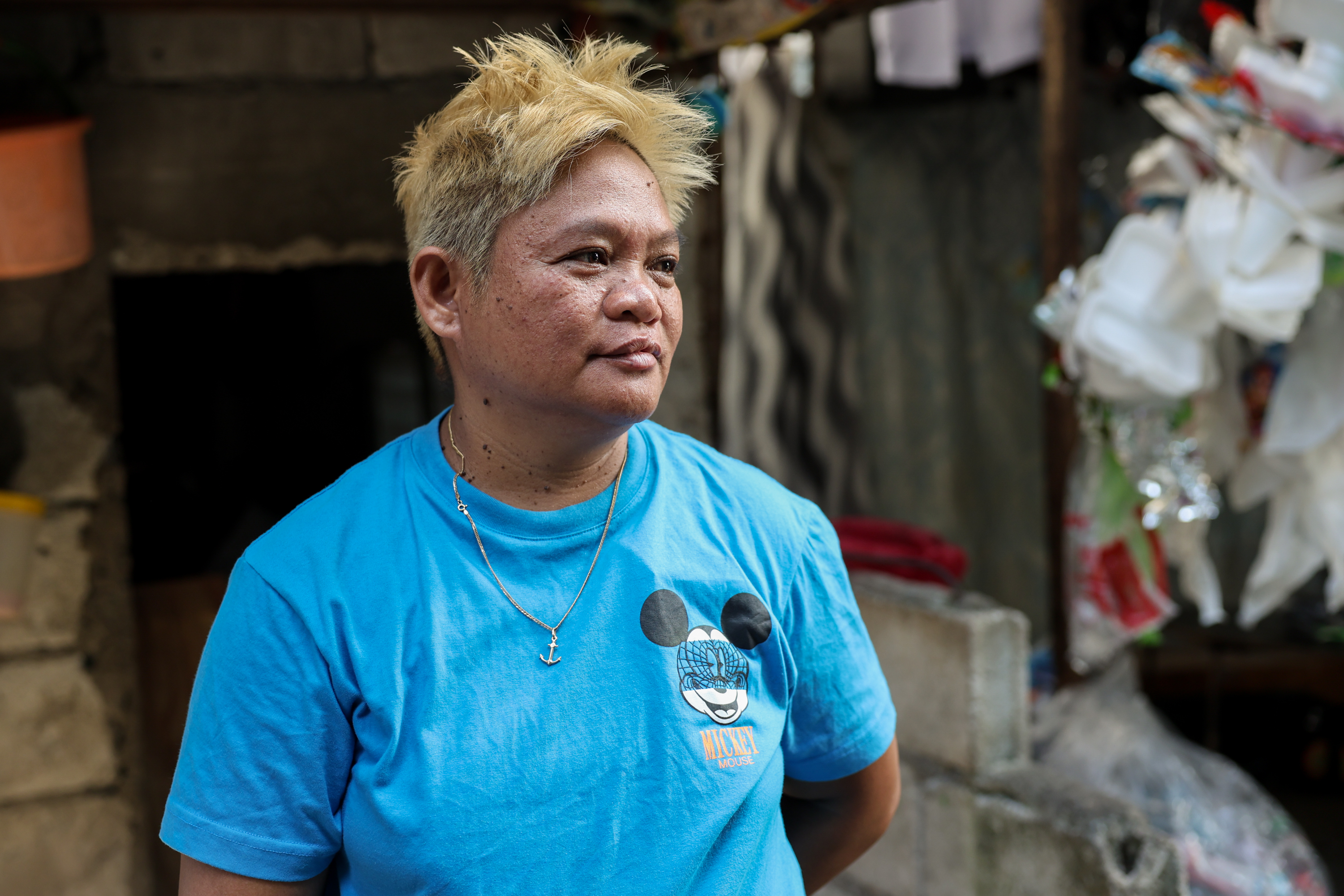
Learning to Save, Learning to Lead
Across the three cities, 12 waste worker associations were organised, registered and trained, giving informal collectors a stronger foundation for managing and growing their work. Self-managed savings groups also helped members develop financial skills that many had never had the opportunity to build before.
"We didn't realise we were already saving money," says Elizabeth Ampuyas, also of the Sweep Balley Association. "We were able to save a considerable amount, which truly helped and brought us relief." For many members, setting money aside became another tangible benefit of turning waste into opportunity.
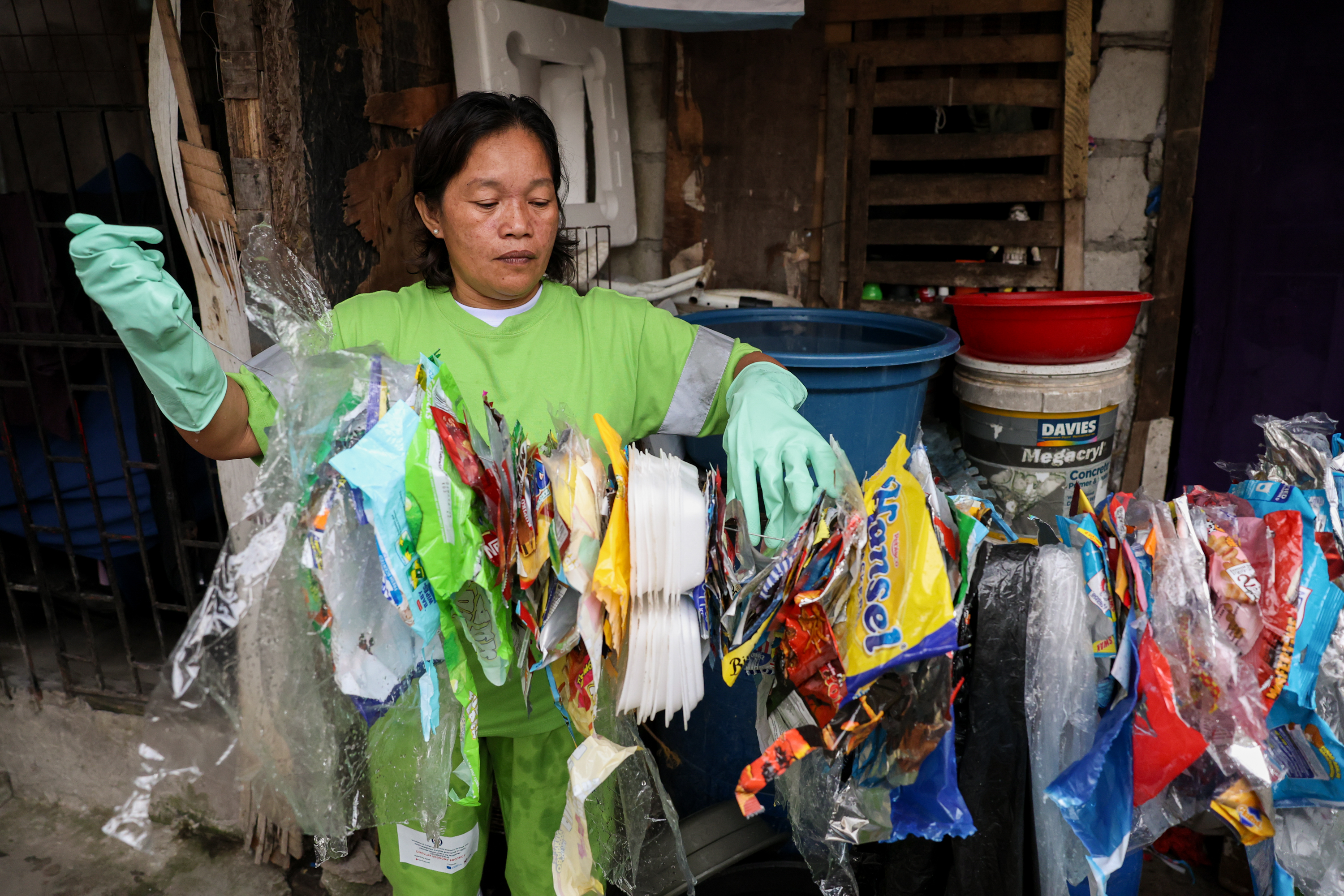
Where the Waste Goes
The associations' work does not end with collection. Once sorted, the plastic enters a recycling chain that creates value from materials that would otherwise end up in landfills or the ocean. "Every Wednesday or Friday afternoon, we bring our collected waste here to the Materials Recovery Facility," explains Emilie Vasquez. "After collecting enough garbage, we deliver and donate them to Aling Tindera, a recycling company, every two weeks."
At the facility itself, the process is systematic. "Junkshops, individuals from different communities, and associations established by the Red Cross are bringing their plastics to this facility," says Jessa Caja of Penguin Recycling Company in Zamboanga City. "The system works like this: first collection, then sorting of 'good' plastics, 'mono' plastics, and then single-use plastics. Upon cleaning the plastics, it will be forwarded to the conveyor, then the presser. From the presser, directly to the water for further cleaning and then the dryer. There is profitability, and sustainability."
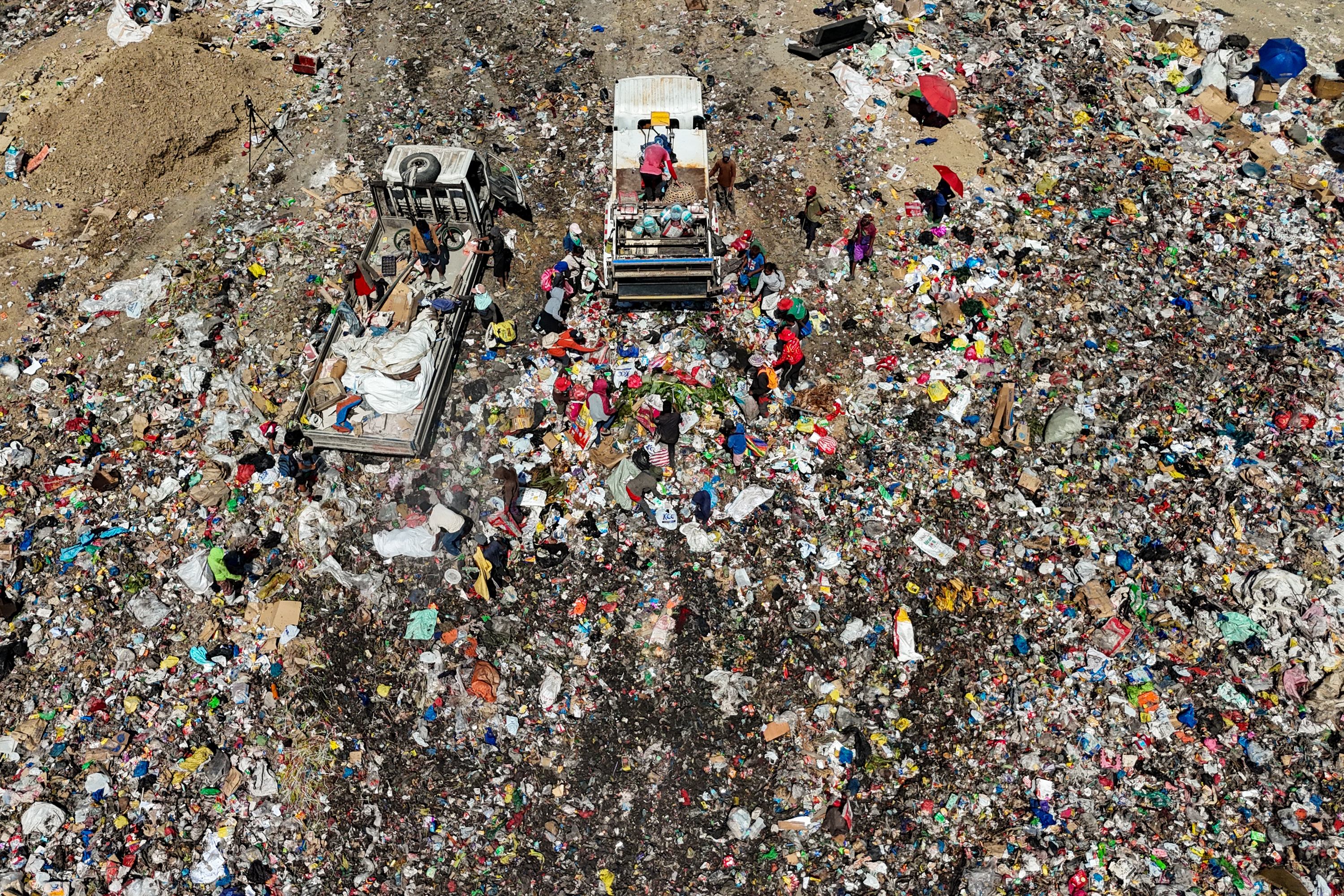
In just eight months, community associations helped divert 3,869 kg of single-use plastics away from landfills and the ocean.

A City-Level Shift in Navotas
In Navotas, the project's impact reaches beyond individual associations and into city infrastructure. The EU supported the rehabilitation of the service entrance of the city's Materials Recovery Facility, a small change with a measurable effect.
"As a result, the waste diversion rate in Navotas has increased. This means significantly less waste is being disposed of in landfills," says Yzabela Nazal-Habunal of the City Environment and Natural Resources Office (CENRO) in Navotas. "Furthermore, thanks to the Philippine Red Cross, citizens of Navotas were given the opportunity to expand their livelihoods. Many of these individuals are waste workers and street sweepers employed by the barangays, who were organised into an association. They were taught the concept of a 'Community Savings Group', which provided them with financial literacy as both individuals and as a collective. Eventually, they were able to establish their own businesses, all of which remain in line with the circular economy. This achieves one of the primary goals of the City of Navotas: balancing environmental needs through a circular economy while simultaneously addressing and supporting the needs of its citizens."
Understanding What Communities Throw Away
In Zamboanga, part of the project's foundation was understanding the problem itself. A Waste Analysis and Characterization Study helped local authorities see, for the first time, exactly what their community was discarding.
"One of the problems of the community of Recodo is that we are one of the most populated barangays in Zamboanga City," says Gamar S. Alih, Councillor for the community of Recodo. "The waste analysis and characterisation study plays a very important role, because we were able to understand what solid waste Barangay Recodo is throwing or disposing of in our landfill."
What this means for EU policy
This project demonstrates how circular economy approaches can deliver environmental, social and economic benefits simultaneously. Rather than focusing solely on awareness raising or recycling, it has helped urban coastal communities reduce plastic waste while creating livelihoods, strengthening financial resilience and supporting local business.
Through partnerships between the European Union, the Philippine Red Cross, the Spanish Red Cross, universities, local authorities, the private sector and civil society, the project has tested practical and scalable solutions, from waste worker associations and savings groups to refill and reuse schemes for small businesses.
The experience offers valuable lessons for priorities on the circular economy, climate resilience and reducing plastic pollution. As the EU advances its circular economy ambitions globally, experiences from Manila, Navotas and Zamboanga highlight the value of investing in locally led solutions that deliver lasting environmental, social and economic impact.